A fleet deploys an AI system to predict failures and optimize maintenance. The models identify early signs of component wear, flag high-risk vehicles, and recommend intervention windows. On paper, the system works.
In practice, nothing changes.
Technicians continue to follow fixed schedules. Planners rely on experience. Vehicles still break down unexpectedly. The issue is not the technology. It is the absence of leadership driving adoption.
According to the ‘2025 Report – Key Trends & Insights’ report – While 71% of organizations cite preventive maintenance as part of their strategy, less than 35% of teams actually spend the majority of their time on preventive maintenance.
In fleet maintenance, even the most advanced AI-powered maintenance software only delivers value when decisions change on the ground. That shift depends on leadership sponsorship.
Where most AI initiatives stall
Fleet maintenance has long been built on routine and experience. Preventive schedules, manual inspections, and reactive fixes are deeply embedded in daily operations. AI introduces a different approach by asking teams to trust early signals instead of visible failures.
Without strong leadership backing, this creates friction.
Maintenance teams may question the reliability of predictions and may hesitate to pull a vehicle out of service based on a predicted risk that has not yet caused a visible issue. Operations teams, under pressure to meet daily routes, often keep vehicles running rather than act on early warnings.
As a result, AI insights remain underused, and the system operates in parallel rather than at the core of decision-making. This is where many fleet reliability AI solutions fail to move beyond pilots.
What strong leadership sponsorship changes
AI adoption accelerates when leadership actively shapes how maintenance decisions are made.
Leaders who engage with fleet operations understand where failures create the most disruption and push teams to act earlier. A basic level of technical familiarity allows them to interpret AI outputs and challenge teams when insights are ignored.
More importantly, hands-on involvement signals that predictive maintenance is not optional. When leadership reviews risk alerts, questions missed interventions, and reinforces data-driven decisions, adoption becomes part of daily workflow rather than an experiment.
An early adopter mindset also plays a critical role. In industries like waste, construction, and freight, where AI adoption is still developing, leaders willing to move first create an operational edge. They accept short-term uncertainty to build long-term control over reliability and extend vehicle life through predictive maintenance.
A practical example in waste fleets
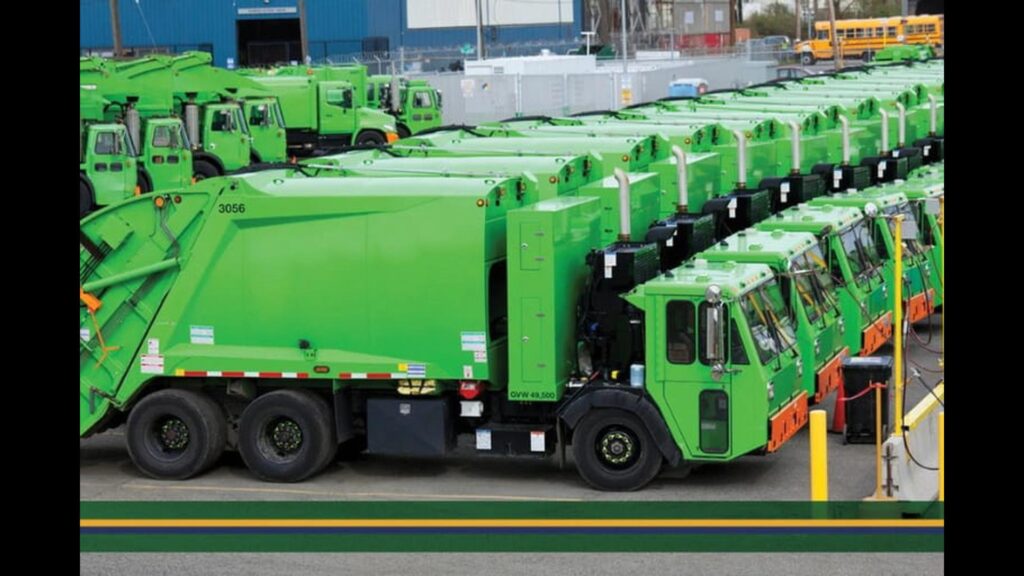
Waste management is typically slower to adopt advanced analytics in maintenance. Many fleets still rely on fixed schedules and reactive repairs, even though operating conditions vary significantly across routes and vehicles.
At Troiano Waste Services, leadership has taken a more proactive stance. By leaning into AI-driven maintenance systems, the organization has created a culture where data-driven insights are expected to influence decisions.
This changes how teams operate. Maintenance interventions are aligned more closely with actual vehicle condition. Emerging issues are addressed earlier, reducing the likelihood of roadside failures. Over time, this approach improves consistency across the fleet and reduces disruption in daily operations.
The impact was measurable. Within weeks of deploying Tensor Planet’s AI-powered Fleet Maintenance Software for exhaust systems, the fleet reduced exhaust-related repairs by 41 percent and prevented multiple service disruptions each week. This was not just a technology outcome, but a result of teams acting on early signals.
In a sector where many competitors are still operating reactively, this positions the company ahead of the adoption curve.
What this means for fleet operators
AI predictive maintenance does not fail because of poor models. It fails when leadership treats it as a tool rather than a shift in how maintenance is managed.
When leaders actively sponsor adoption, insights translate into action. Vehicles are serviced before failures occur, maintenance becomes more targeted, and operations run with fewer disruptions.
The result is not just improved uptime, but a more controlled and predictable maintenance system built around how vehicles actually perform in the field.