A vehicle breaks down unexpectedly on the road. The issue is identified, but the required part is not immediately available. There is no backup vehicle to deploy. Routes are delayed, service commitments are missed, and the disruption spreads quickly across operations. What begins as a single failure turns into a broader operational setback.
This is not just a breakdown. It reflects a lack of visibility into how assets are actually wearing in the field, and why many fleets are turning to AI-driven predictive maintenance for fleets to prevent such scenarios.
Where misalignment starts
In most fleets, maintenance schedules are based on fixed intervals such as mileage or engine hours. These intervals assume uniform usage, even though vehicles operate under very different conditions. A refuse truck running dense urban routes or a construction vehicle operating under heavy loads experiences wear very differently from a long-haul freight vehicle on steady highway cycles.
Inventory planning follows a similar pattern. Parts are stocked based on historical usage or safety buffers, not on the current condition of components in service. This creates gaps where critical parts are unavailable when needed, while other inventory sits unused.
Operations teams plan routes and utilization assuming that vehicles will be available as expected. When unexpected failures occur and no backup capacity exists, these plans break down immediately.
Over time, these independent decisions drift further away from actual asset behavior. The result is delayed interventions, parts shortages at critical moments, and increasing operational fragility. These are exactly the conditions where fleets begin adopting AI-driven approaches to prevent roadside breakdowns and regain operational control.
How predictive analytics creates alignment
Predictive analytics introduces a shared, forward-looking view of asset condition across maintenance, inventory, and operations.
AI models interpret telematics time-series operational data to understand how each vehicle behaves relative to its normal pattern. Instead of relying on fixed thresholds, the system learns how components perform under different duty cycles, environmental conditions, and usage intensities. As these patterns begin to shift, early signs of degradation become visible, allowing the system to estimate how risk is developing and when intervention is required.
This enables maintenance teams to act before failures occur, aligning service with actual component condition rather than predefined intervals. Components under higher stress can be addressed earlier, while others can remain in service without unnecessary intervention.
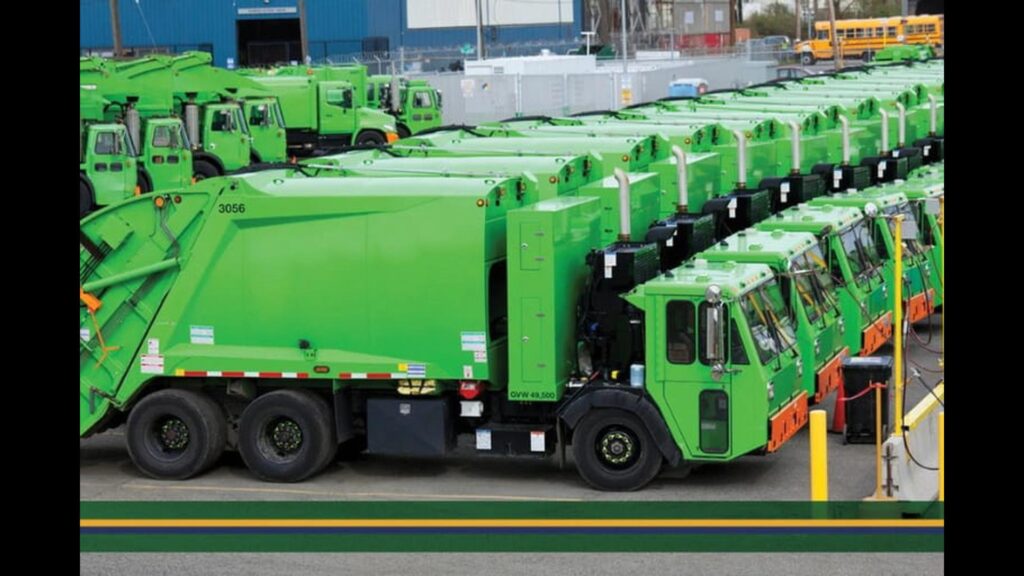
Using Tensor Planet’s predictive maintenance software a waste hauler has achieved 41% reduction in exhaust repairs and saved an estimated $87,000 per year just in exhaust repair costs.
Inventory planning becomes more accurate because demand is tied to predicted need rather than historical averages. When the system indicates which parts will be required and when, procurement can be aligned accordingly, reducing both stockouts and excess inventory.
Operations teams gain predictability. Instead of reacting to sudden breakdowns, they can plan around scheduled service windows and maintain more stable routing and utilization. Over time, this coordination helps save on truck repairs with the help of AI by reducing repeat failures, emergency fixes, and inefficient part usage.
What this means for fleet operators
Alignment comes from shared visibility into future risk. When maintenance, inventory, and operations are guided by the same predictive signals, decisions become synchronized.
Vehicles are serviced before failure, parts arrive in line with actual demand, and operations no longer absorb unexpected disruptions. Instead of each function reacting independently, decisions are driven by a shared view of asset condition. The result is not just fewer breakdowns, but a system that stays aligned as conditions change.