If you manage a commercial fleet, your maintenance strategy is one of the most controllable variables affecting uptime, operating cost, and driver safety. Yet most fleets operate under a mix of approaches without a clear framework for why. This post breaks down the three core maintenance strategies, how they differ in practice, and why the distinction matters more now than it did a decade ago.
Reactive Maintenance: Fix It When It Breaks
Reactive maintenance means you act after a failure occurs. A truck goes down, a driver calls in, dispatch scrambles.
The appeal is simplicity. No upfront investment in monitoring or scheduling. But the cost structure is punishing. Emergency repairs carry labor premiums. Tow costs and rental vehicles add up. Drivers lose productive hours. And depending on where the breakdown happens, there are safety and liability considerations that are hard to quantify.
More importantly, reactive maintenance treats failures as sudden events. They rarely are. Most drivetrain, hydraulic, and electrical failures follow a degradation curve that begins days or weeks before a fault code appears. By the time the truck is on the shoulder, the failure was already underway.
Preventive Maintenance: Fix It on Schedule
Preventive maintenance uses fixed intervals, mileage thresholds, or calendar dates to trigger service. Change the oil every 5,000 miles. Inspect brakes every 30 days. Replace filters on a quarterly cycle.
This is a meaningful improvement over purely reactive operations. It reduces the frequency of catastrophic breakdowns and makes parts procurement more predictable. Most regulated fleets default to this model.
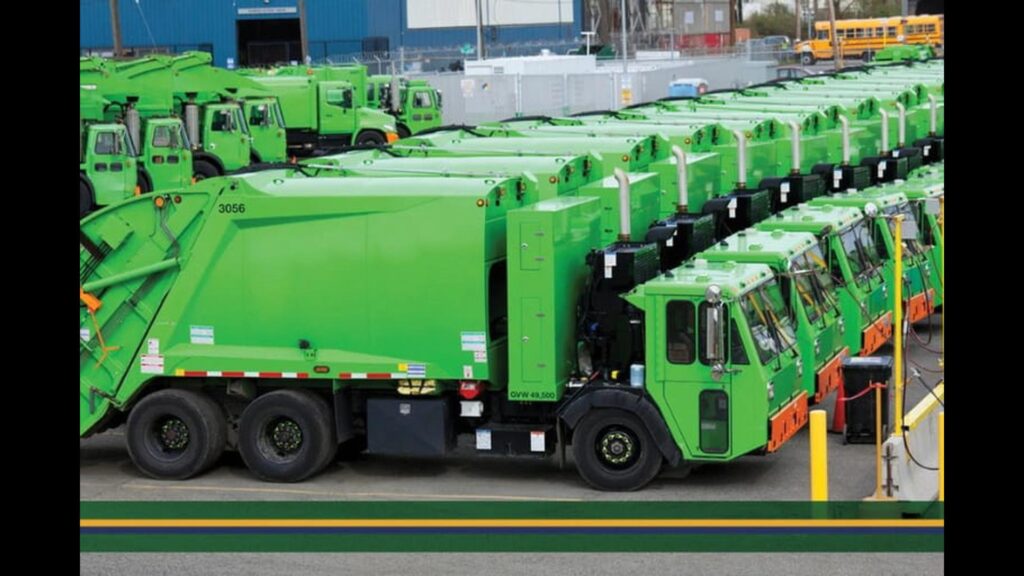
The structural problem is that fixed intervals assume all vehicles age at the same rate. They do not. A refuse truck running stop-and-go routes in summer heat accumulates stress differently than a freight vehicle on a long-haul highway corridor. Preventive schedules are calibrated to the average case, which means they either replace components with useful life remaining or miss stress patterns that develop faster than the schedule accounts for.
Predictive Maintenance: Act on the Signal, Not the Calendar
Predictive maintenance uses continuous monitoring of vehicle operating data to detect early indicators of component degradation. The goal is to identify risk while there is still time to plan an intervention, schedule it during low-impact hours, and avoid the cost and disruption of an unplanned breakdown.
The mechanics are straightforward. Modern telematics systems generate continuous data streams from engine sensors, transmission systems, and body components. Analytics platforms process those streams and flag deviations from established baselines. When a pattern matches a known precursor to failure, maintenance is triggered based on condition rather than time.
Representative telematics signals used in predictive analytics include:
- Battery voltage decay patterns during overnight rest periods
- Coolant temperature trending above historical baseline under normal load
- DPF pressure differential and regeneration cycle frequency
- PTO engagement anomalies and hydraulic pressure variance
- Fuel consumption rate shifts relative to route and load profile
- Brake system temperature and response time drift
The value is not just in catching failures earlier. It is in the shift from emergency windows to planned windows. A planned repair takes less time, uses standard labor rates, and can be staged with parts in hand. According to McKinsey, organizations that implement predictive maintenance reduce unplanned downtime by up to 50% and lower maintenance costs by 18 to 25%. A 2017 PwC study of European industrial operators found that improving data access was the single most critical factor in predictive maintenance outcomes, with 60% of maintenance professionals citing it as essential.
For fleet operations specifically, the benefit compounds over a mixed asset base. Identical vehicles operating on different duty cycles degrade at different rates. Predictive systems surface which specific vehicles are drifting toward risk, rather than applying blanket schedules across an entire fleet.
Choosing the Right Mix
Most mature fleets do not run a single strategy in isolation. Scheduled preventive maintenance remains appropriate for low-cost, time-sensitive consumables like wiper blades and cabin filters. Predictive monitoring is better suited to high-stakes components where unexpected failure creates the most operational and financial damage.
The direction of travel is clear. As vehicle telematics becomes standard equipment and analytics platforms become easier to integrate, the cost of predictive monitoring continues to fall. Fleets that invest in condition-based data now are building the operational foundation that makes every maintenance decision faster, better-supported, and less expensive.